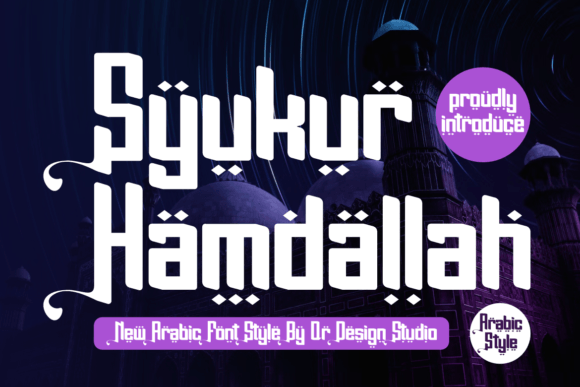
Syukur Hamdallah: Evaluating a Bold Display Font for Modern Branding
In the crowded landscape of digital typography, finding a typeface that balances authenticity with versatility is a common challenge for designers and brand managers. Syukur Hamdallah has emerged as a notable contender in the display font category, offering a distinct aesthetic that bridges traditional calligraphic influences with contemporary boldness. For professionals aged 20 to 50 who are curating visual identities, understanding the specific characteristics of this font is essential before committing it to a project. This analysis explores what makes Syukur Hamdallah unique, how it compares to other stylistic options, and where it fits best within a comprehensive design strategy.
Defining the Aesthetic of Syukur Hamdallah
At its core, Syukur Hamdallah is classified as a bold and authentic display font. Unlike sans-serif workhorses designed for long-form readability, display fonts are engineered to capture attention at larger sizes. Syukur Hamdallah achieves this through thick strokes, high contrast, and a personality that feels both grounded and expressive. The term "authentic" in its description suggests a departure from sterile, geometric perfection, leaning instead into organic curves and humanistic touches that resonate with viewers on an emotional level.
The font’s structure supports a wide range of contexts, but its primary strength lies in its ability to convey confidence. Whether used in a logo mark or a headline, the weight of the letters commands presence without appearing aggressive. This balance is difficult to achieve; many bold fonts sacrifice elegance for impact, while elegant fonts often lack the punch required for modern marketing materials. Syukur Hamdallah attempts to occupy the middle ground, providing a robust visual anchor that can support various graphic elements.
Comparative Analysis: Display Fonts vs. Utility Typefaces
To understand the value of Syukur Hamdallah, it is helpful to compare it against other categories of typography. When evaluating font options, designers typically choose between utility typefaces (such as standard sans-serifs) and decorative display fonts. Utility typefaces are invisible; they facilitate reading without drawing attention to themselves. They are ideal for body text, legal documents, or interface design where clarity is paramount.
In contrast, Syukur Hamdallah is not designed for invisibility. It is a statement piece. When compared to other display fonts, which can often be overly ornate or difficult to decipher, Syukur Hamdallah maintains a level of legibility that makes it more versatile than purely decorative scripts. However, this comes with a tradeoff. While it is more readable than intricate calligraphy, it is less suitable for small sizes than a dedicated text font. Users must recognize that this font thrives in headlines, logos, and large-scale prints, rather than in paragraphs or footnotes.
Another point of comparison is the trend toward minimalism in branding. Many modern brands opt for clean, neutral fonts to appear sophisticated and timeless. Syukur Hamdallah offers an alternative to this approach. It introduces character and warmth, which can be crucial for brands looking to establish a personal connection with their audience. If a brand’s goal is to appear approachable, artisanal, or bold, this font may be a superior choice to a generic geometric sans-serif.
Practical Applications and Use Cases
The versatility of Syukur Hamdallah allows it to perform well across several industries. Its bold nature makes it particularly effective in sectors where visibility is key. Below are some specific contexts where this font excels:
- Logo Design: The distinct letterforms provide a strong foundation for logotypes. Because the font is authentic and bold, it can stand alone as a wordmark without needing extensive graphical embellishment.
- Apparel and T-Shirt Printing: In fashion, especially streetwear and casual apparel, typography often serves as the primary graphic element. Syukur Hamdallah’s thick strokes ensure that designs remain visible and impactful when printed on fabric, even from a distance.
- Sports and Fitness Branding: The energetic and strong appearance of the font aligns well with the values of athleticism and performance. It can convey power and determination, making it a suitable choice for gym logos, team jerseys, or promotional materials for sporting events.
- Packaging and Labels: For products that want to stand out on a shelf, such as artisanal foods, beverages, or cosmetics, the font adds a premium yet accessible feel. It helps differentiate the product from competitors using standard corporate typography.
These examples illustrate that Syukur Hamdallah is not limited to a single niche. Its adaptability stems from its balanced design, which avoids being too quirky or too rigid. This makes it a safe yet interesting choice for projects that require a touch of personality without sacrificing professionalism.
Evaluating Limitations and Tradeoffs
While Syukur Hamdallah offers significant benefits, it is important to acknowledge its limitations to make an informed decision. No font is universally perfect, and understanding where this typeface falls short is just as important as knowing its strengths.
Legibility at Small Sizes: As a display font, Syukur Hamdallah is optimized for large formats. Using it for body text, captions, or small print can result in reduced readability. The intricate details and bold weights may blur together or appear cluttered when scaled down. Designers should pair it with a complementary, highly legible sans-serif or serif font for secondary information.
Contextual Appropriateness: The bold and authentic style may not suit every brand identity. For corporations aiming for a strictly formal, conservative, or ultra-modern tech aesthetic, the organic qualities of Syukur Hamdallah might feel out of place. It is crucial to align the font’s personality with the brand’s voice. If the brand voice is serious, clinical, or minimalist, a more neutral typeface might be a better fit.
Overuse in Trends: Display fonts often ride waves of design trends. While Syukur Hamdallah is distinctive now, designers should consider its longevity. Will it look dated in five years? Because it leans towards a timeless authenticity rather than a fleeting fad, it has better staying power than many novelty fonts, but it is still wise to use it judiciously to maintain its impact.
Decision Factors for Designers and Brand Managers
When deciding whether to incorporate Syukur Hamdallah into a project, consider the following factors to ensure it aligns with your goals:
- Primary Message: Does the brand need to convey strength, authenticity, or warmth? If yes, this font is a strong candidate. If the message is about precision, technology, or neutrality, look elsewhere.
- Medium and Scale: Will the text be viewed primarily at large sizes (logos, headers, posters)? If so, Syukur Hamdallah will perform well. If the primary use is small-print documentation, it is not the right tool.
- Visual Hierarchy: How will this font interact with other elements? It works best when given space to breathe. Crowding it with complex graphics or other busy fonts can diminish its effectiveness.
- Target Audience: Consider the demographics. Adults aged 20–50 often appreciate authenticity and quality. A font that feels hand-crafted or genuine can resonate well with this group, who are increasingly skeptical of overly corporate or artificial branding.
Ultimately, the choice of typography is a strategic decision. Syukur Hamdallah offers a compelling option for those seeking a bold, authentic voice in their visual communication. By understanding its strengths in branding, apparel, and sports contexts, and respecting its limitations regarding size and formality, designers can leverage this font to create memorable and effective designs. It is not a one-size-fits-all solution, but for the right project, it provides the distinct character needed to cut through the noise of the modern visual landscape.
For those exploring alternatives, it is advisable to test Syukur Hamdallah alongside other display options in real-world mockups. Seeing how the letters interact with specific colors, layouts, and images will provide the clearest indication of whether it is the right fit for your specific branding needs. The goal is not just to choose a font that looks good in isolation, but one that enhances the overall communication strategy of the project.